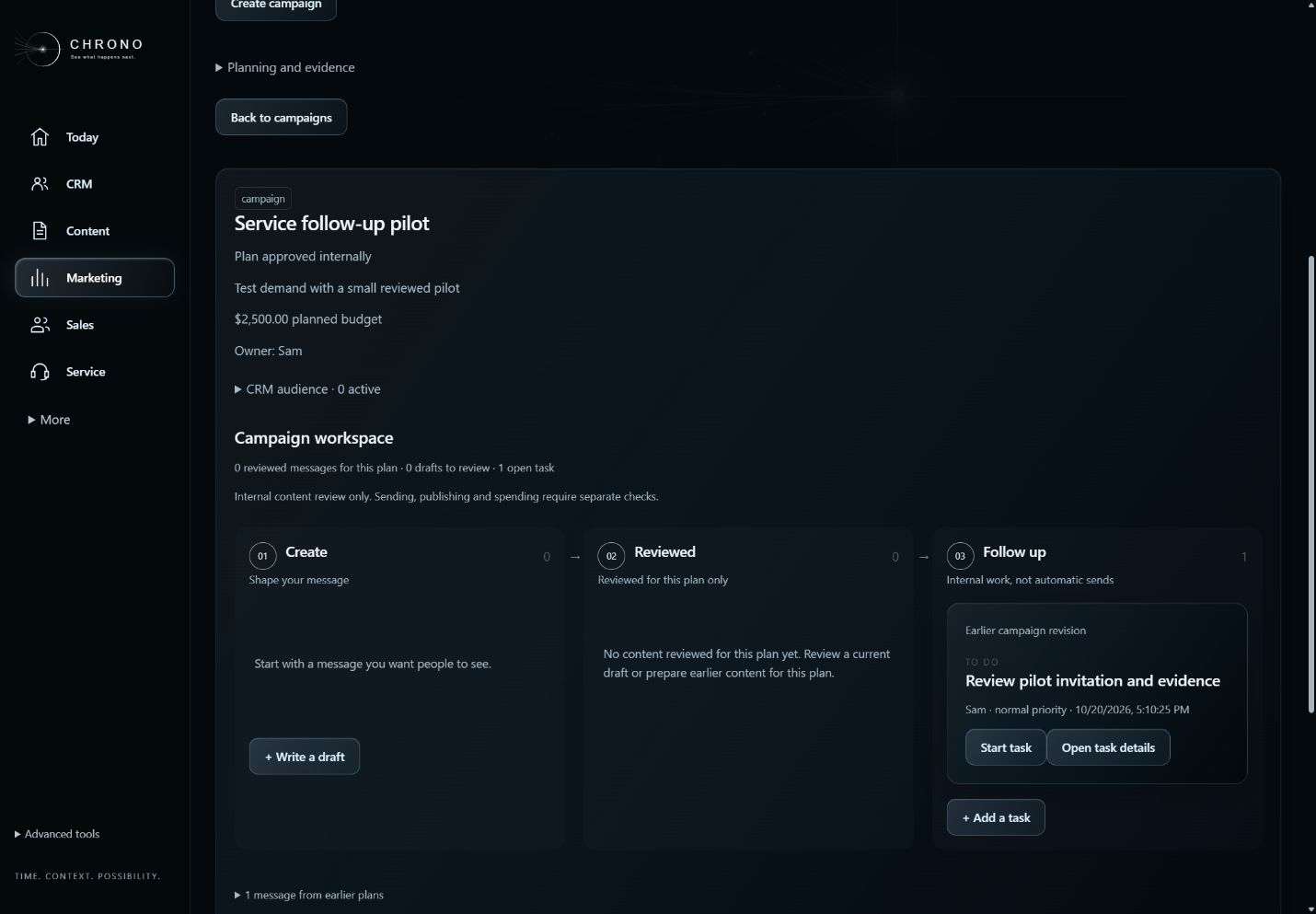

A campaign rarely begins with a perfect brief and ends with an obvious lesson. It changes as people learn. The audience shifts, the offer gets narrower, someone notices a customer constraint, and the launch moves. If the final report only shows the finished campaign and a few totals, much of the useful learning has already disappeared. Campaign memory means keeping the decisions and their context alongside the work.
Save the question before making the content
Imagine a business inviting existing customers to a pilot. The original question is whether a smaller, guided introduction will help customers evaluate a new service. The audience is a defined group, the planned budget is $500, and a team member must review the invitation. Those facts give the draft a purpose. Without them, a writer may optimize for attention while the campaign owner is trying to learn about readiness.
Capture the intended outcome in plain language. Add the audience, constraints, source evidence and owner. Distinguish a target from an observed result: hoping for ten conversations does not mean ten conversations are likely. A good brief makes the question clear enough that the team can tell whether its later evidence actually answers it.
Treat revisions as information
Suppose two customers mention that the proposed week conflicts with their annual planning. The team moves the invitation back. Keeping the earlier timing and the reason for the revision makes the change understandable. Someone reviewing the campaign a month later can see that timing was an intentional response to evidence.
This does not require turning every copy edit into a major decision. Preserve changes that affect the objective, audience, offer, timing, budget or follow-up. A short explanation linked to the relevant source is often enough. The important thing is that the next person can distinguish an accidental drift from a deliberate adjustment.
Design the handoff before the reply arrives
Marketing work does not stop at a published asset. A reply might become a sales conversation, a service question, or a request to hear back later. Decide who owns those paths before the campaign begins. Include enough context for the receiving person to understand what the customer saw and why they were included.
For the pilot example, a useful handoff contains the invitation version, the customer’s response, any promised next step, and a named owner. It avoids turning an exploratory reply into an assumed buying commitment. The shared relationship record becomes the bridge between the campaign and the conversation that follows.
Review the sequence, then improve the next brief
At review, separate what the team intended, what it did, and what it observed. Look at changes made during the campaign and ask which assumptions survived contact with customers. A change in replies after a revision may be interesting, but the sequence alone does not prove that the revision caused it. Audience differences and other events may also matter.
Carry a small number of specific lessons into the next brief. “Check the planning calendar with this audience” is more useful than “Timing matters.” Chrono’s marketing direction connects goals, audience context, drafts, review and follow-up to a shared temporal record. The value is a campaign that leaves the next team better informed, even when the result was unexpected.